
Serious games are interactive tools that combine elements of games, such as roles, rules, decisions, and feedback, with scientific models and real-world data. They support learning, exploration, and decision-making under deep uncertainty.
WHY SERIOUS GAMES?
The purpose of serious games is to allow players to test decisions, policies, or strategies in a safe setting, observe system responses over time, and explore trade-offs that may be difficult to grasp through static reports or models alone.
Serious games are particularly useful for addressing issues characterized by uncertainty, multiple actors, competing objectives, and long-term consequences such as climate change adaptation and water management. In the context of water and climate governance, serious games are often used to represent socio-hydrological systems and to simulate how human decisions interact with environmental processes.
TRANSCEND SERIOUS GAMES
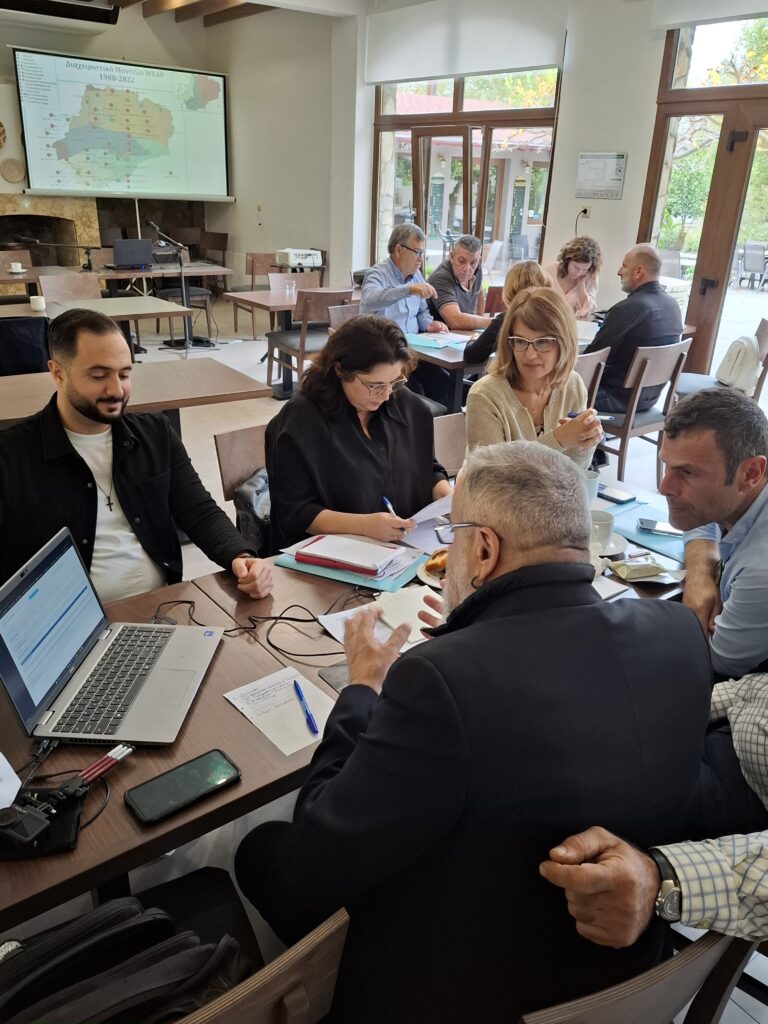
In TRANSCEND, serious games are developed to explore Transformational Adaptation Policies (TAPs) in the seven project river basins (living labs). The project focuses on moving beyond incremental adaptation toward policies that can generate structural change in water use, land use, production systems, and risk management. Serious games provide a practical way to embed these policies as explicit decisions, test them under climate uncertainty, and evaluate their impacts using quantitative indicators. They also serve as a bridge between scientific modeling and stakeholder engagement, enabling co-learning and informed discussion around transformational change, supporting comparison between alternative adaptation pathways.
WHY ARE SERIOUS GAMES RELEVANT?
Serious games address a key gap in climate adaptation planning: the difficulty of testing transformational policies before they are implemented. By combining models, scenarios, and participatory decision-making, the games make long-term consequences tangible and comparable. They help reveal unintended effects, distributional impacts, and system-wide feedback that may otherwise remain hidden. This relevance is particularly strong in water systems, where decisions in one location or sector often have delayed and downstream consequences. Their value lies not only in the numerical results they produce, but also in the conversations, reflections, and learning processes they enable. In TRANSCEND, serious games are therefore both analytical tools and social processes, supporting the co-production of knowledge around transformational adaptation.
WHO CAN PLAY?
TRANSCEND serious games are addressed to a broad set of users, including:
- Policy makers and water authorities.
- Practitioners and technical experts.
- Stakeholders that are directly affected by water and land-use decisions (e.g. farmers, utilities, basin organizations).
- Researchers, students or anyone interested in climate adaptation and governance.
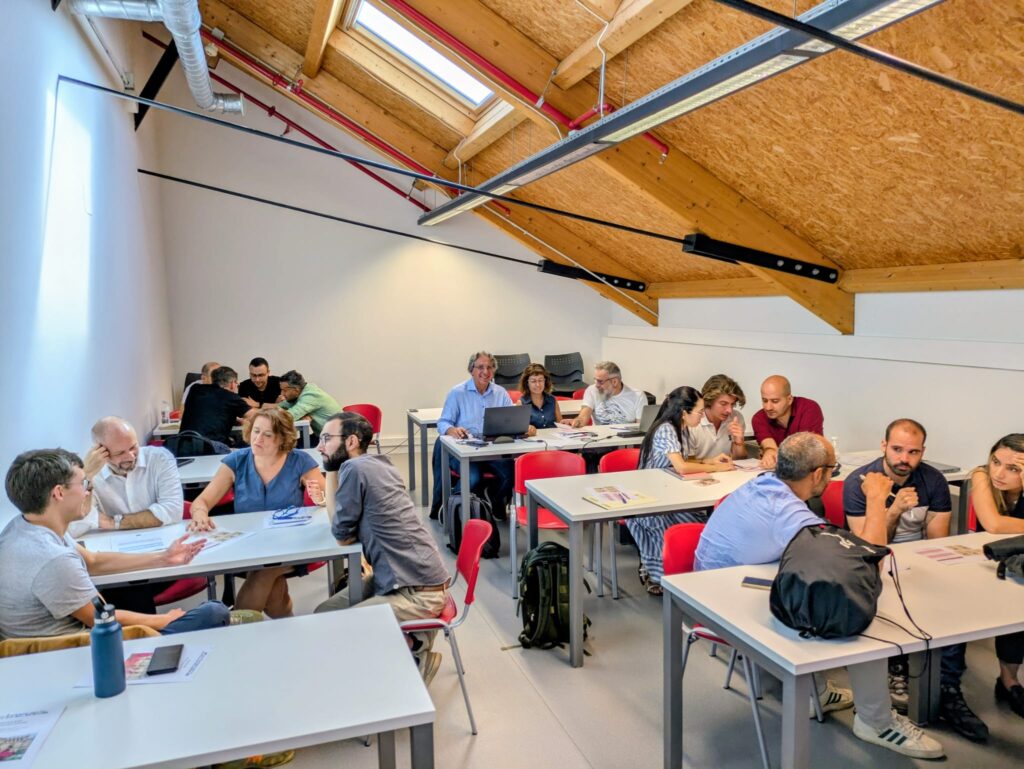
The games are designed to be flexible enough to support both expert-led analysis and facilitated stakeholder workshops.
HOW ARE TRANSCEND SERIOUS GAMES BUILT?
TRANSCEND serious games are model based, meaning that they rely on quantitative hydrological, climate, and economic models rather than hypothetical narratives. That is why they are also called Scenathons, which stands for scenario marathons. Each game is tailored to a specific living lab and integrates:
The games are implemented primarily through web-based platforms using R Shiny apps, allowing them to be played fully online or in hybrid settings. Players take decisions that represent TAPs, and the underlying models compute system responses and indicators.
A SERIOUS GAME FOR EACH LIVING LAB:
AN ONGOING PROCESS
Before the end of the project, serious games will be updated and refined based on stakeholder feedback and expert knowledge of each living lab, ensuring that assumptions, rules, and indicators better reflect local realities. Games may be played multiple times with stakeholders to validate results, deepen discussion, and test revised strategies. The final game sessions aim to consolidate learning around which TAPs appear most robust and under which conditions.
After the project, serious games can continue to be used as decision-support and learning tools, adapted to new scenarios, updated datasets, or emerging policy questions. They can also be transferred to other contexts, used in training and education, or further developed to support monitoring and evaluation of implemented adaptation measures.