
Europe’s water challenges are becoming increasingly interconnected. Climate change, growing pressure on water resources, competing demands across sectors and the degradation of aquatic ecosystems are making it clear that water resilience cannot be achieved through isolated solutions. It requires better evidence, more integrated decision-making and closer cooperation across policy areas.
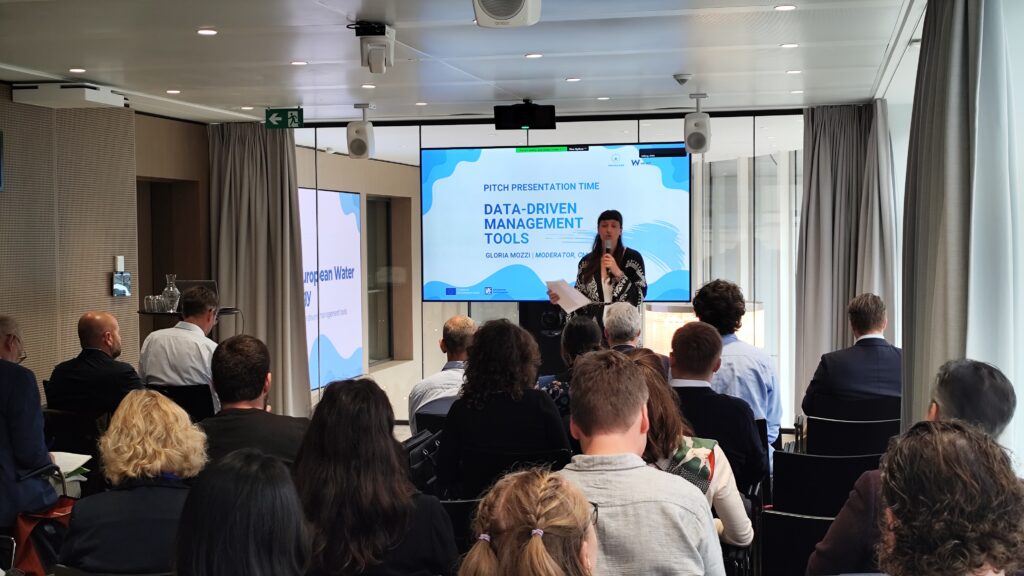
These themes were at the heart of Science for the European Water Resilience Strategy, an event that brought together European research projects, policy representatives and water experts to discuss how scientific knowledge can support the development and implementation of Europe’s Water Resilience Strategy.
The event brought together contributions from TRANSCEND, RECREATE, STARS4Water, SOS Water, COAST-SCAPES, MARCLAIMED, ACQUAOUNT, NEXOGENESIS, GOVAQUA, InnWater, AWARD and RETOUCH, alongside the Dutch Ministry of Infrastructure and Water Management. Their work covers different dimensions of water resilience, from data and digitalisation to water scarcity, climate adaptation, alternative water resources, economics and governance. Despite these different perspectives, the discussions revealed a strong convergence around a shared message: water resilience depends not only on the solutions available, but also on how evidence, competing interests and long-term impacts are brought together in decision-making.
Better data, better decisions
Digital tools, monitoring systems and modelling approaches are expanding the capacity to understand water availability, anticipate risks and explore possible futures. Across the projects, however, a recurring message emerged: generating more data is not enough.
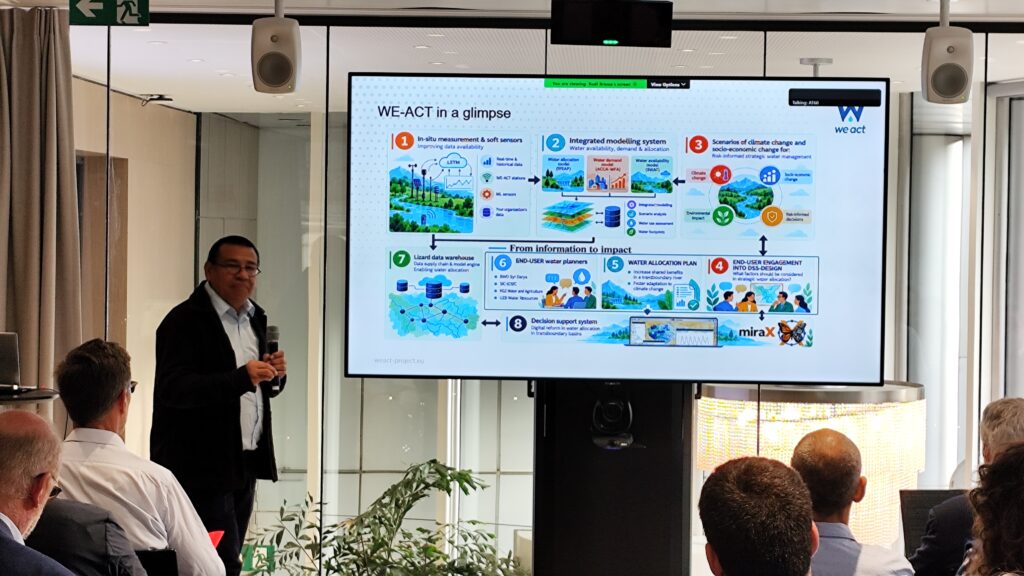
Work presented by projects such as RECREATE, STARS4Water and SOS Water highlighted the importance of making information interoperable, accessible and usable across institutional and geographical boundaries. Different datasets, models and decision-support systems need to work together if they are to provide a reliable picture of water systems and support decisions at the appropriate scale.
The discussion also highlighted the importance of moving from reactive to more predictive water management. Better monitoring and modelling can help anticipate changes in water availability, while integrated tools can connect information from different sources and support decisions across river basins and administrative boundaries.
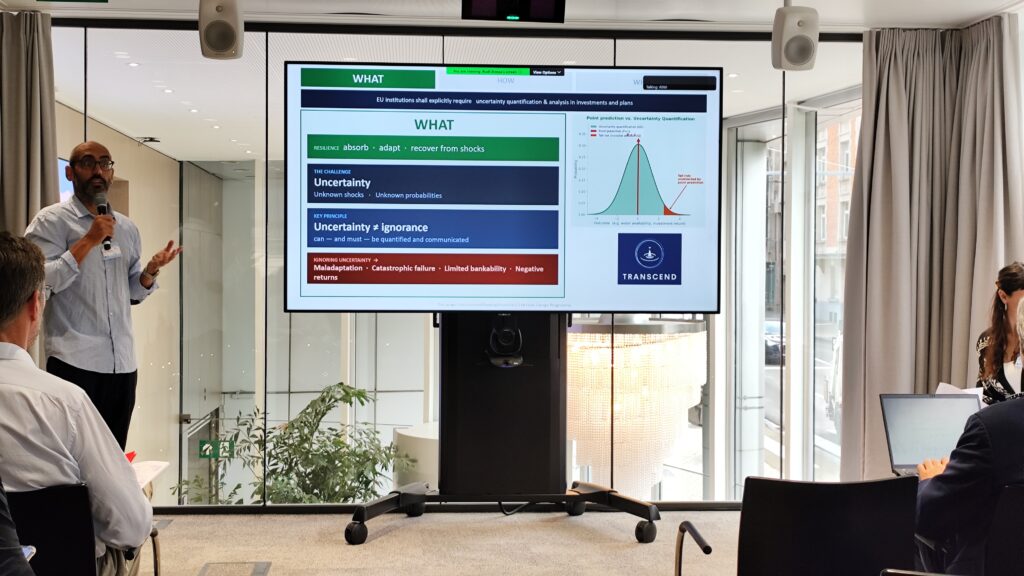
Equally important is the ability to account for uncertainty. As highlighted by TRANSCEND, water-related decisions often involve long time horizons, changing climatic conditions and socioeconomic developments that cannot be predicted with certainty. Rather than treating uncertainty as a reason for inaction, decision-makers need approaches that make it explicit and allow different scenarios, risks and trade-offs to be assessed.
The challenge, therefore, is to move from fragmented information towards a more integrated and forward-looking approach to water management.
Water scarcity is about more than supply
A second key message concerned the need to address water scarcity through a broader perspective than the search for additional resources or technological efficiency alone.
The experiences presented by projects including MARCLAIMED, ACQUAOUNT, RECREATE and COAST-SCAPES showed how water reuse, managed aquifer recharge, improved irrigation and digital water management can contribute to reducing pressure on water resources. Yet their effectiveness depends on the conditions in which they are implemented, the scale at which they are assessed and their interaction with other measures.
An intervention that appears beneficial at farm or local level may have different consequences when considered across an entire river basin. Efficiency gains, for instance, do not automatically translate into lower overall water consumption. Likewise, investments in new infrastructure need to be assessed against actual water needs, environmental safeguards, long-term operating costs and the distribution of benefits and responsibilities.
The discussion on water economics reinforced this point. Pricing, incentives and economic analysis can influence how water is allocated and used, but they need to support real decision-making rather than becoming a purely formal exercise. Understanding who benefits, who bears the costs and whether an intervention remains viable over time is essential when evaluating potential solutions.
This is particularly relevant as Europe faces increasingly uneven patterns of water availability. The challenge is not simply to secure more water, but to manage existing resources more effectively while protecting the ecosystems on which water resilience ultimately depends.
Governance is where the connections matter
The discussions also highlighted a fundamental challenge: even the best data, models and technologies cannot deliver resilience on their own.
Water management involves decisions that connect agriculture, energy, food production, industry, ecosystems and local communities. These interdependencies frequently cross administrative boundaries and bring different interests into competition. Measures that benefit one sector may create costs or risks for another, while the institutions responsible for different aspects of the same problem may operate with different mandates, priorities and resources.
Projects such as NEXOGENESIS, GOVAQUA, InnWater, AWARD and RETOUCH brought this governance dimension to the forefront, highlighting the importance of stakeholder engagement, institutional capacity and new forms of cooperation in enabling water transitions.
The experiences shared during the event point to the importance of identifying trade-offs early, clarifying responsibilities and ensuring that decisions are informed by their wider impacts. This also means strengthening the capacity of institutions and river basin organisations to use the tools and knowledge developed through research once individual projects come to an end.
This does not mean that every conflict can be resolved or that all interests can be reconciled. In many cases, difficult choices will remain. The objective is to make those choices more transparent, evidence-based and accountable, while ensuring that the costs and benefits of water-related decisions are properly considered.
A shared direction for water resilience
One of the most significant outcomes of the event was the convergence of perspectives across projects working on different aspects of the water challenge. From digitalisation and climate risk to economics, alternative water resources and governance, a common understanding emerged: water resilience requires a systemic approach that recognises the connections between water, the environment, economic activity and society.
This perspective also calls for stronger collaboration between research and policy. Scientific projects can develop methods, generate evidence and test approaches in real-world contexts. Their contribution becomes more effective when their findings inform policy design, investment choices and the implementation of existing frameworks — and when the practical needs of decision-makers help shape future research.
The discussion in Brussels was therefore not simply an exchange of project results. It was an opportunity to identify shared challenges and consider how the knowledge generated across European research initiatives can contribute to a more coherent approach to water resilience.
The next step is to build on these common insights and translate them into a collective contribution to the European policy debate. By connecting scientific evidence with practical experience and policy needs, the research community can help ensure that Europe’s Water Resilience Strategy addresses not only individual pressures on water resources, but also the wider systems and decisions that determine their long-term resilience.