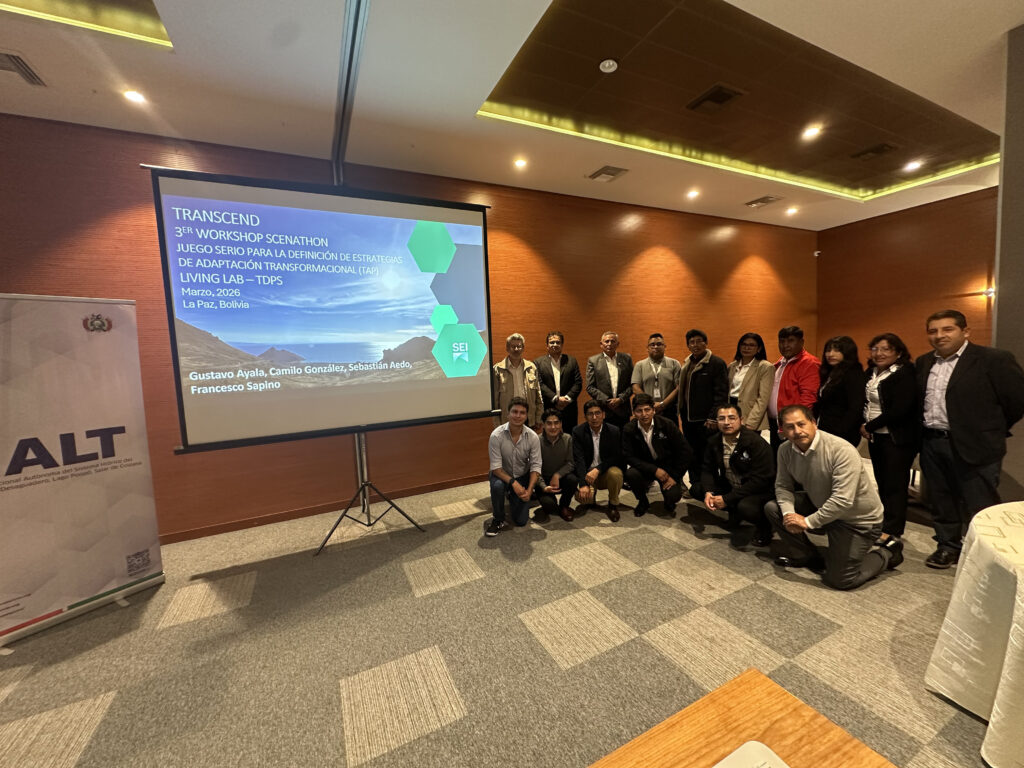
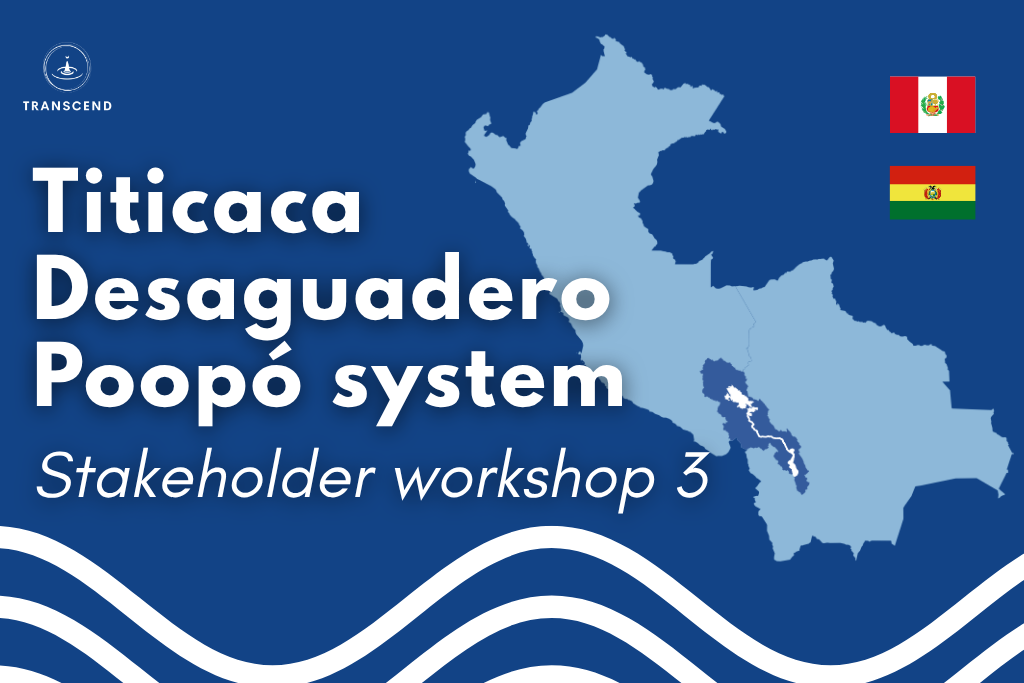
The third Scenathon Workshop of the Titicaca-Desaguadero-Poopo system was held on March 10th 2026, in La Paz, Bolivia, in coordination with the local partner ALT (Binational water authority of Titicaca Lake, Desaguadero River, and Poopo Lake TDPS).
In this third edition, hydrological modeling coupled with economic modeling was used to evaluate the impact of the TAPs identified in previous workshops. The analysis considered the effects of anthropogenic activities (agriculture) and climate change on water availability, as well as their productive and economic implications in the TDPS system. The workshop helped to validate the TAPs identified in previous workshops, and to propose new adaptation alternatives to water scarcity conditions in the TDPS system. To facilitate dialogue and objective decision-making, the “Serious Games” methodology was applied. Serious games use information from the developed models to simulate scenarios, present results through interactive visualization platforms (Shiny app in R), and incorporate uncertainty.
Additionally, the workshop explored the barriers and opportunities for implementing the TAPs, taking into account the local context and the specific social and economic characteristics of the TDPS system.
The event brought together representatives from the following institutions: 1) Universidad Mayor de San Andrés de Bolivia (UMSA), 2) Universidad Nacional del Altiplano de Puno (UNAP), 3) Ministry of Rural Productive Development and Water of Bolivia (MDPRyA), 4) Ramis Agricultural Users Association (Peru), 5) Regional Government of Oruro (GADOR), 6) Universidad Técnica de Oruro (UTO), 7) Oruro Irrigation Association (Bolivia).
This workshop represented a key step in the collaborative co-creation process among academic institutions, government entities, and water users from Bolivia and Peru.