
The 4th Stakeholder workshop in the Nitra living lab took place on 15 -16 October in Prievidza, just a couple of hundred meters from the Nitra River.
The workshop kicked off with an introduction to the Transcend project, followed by presentations on climate modelling by Jeremy Pal (CMCC) and on climate projections for the Nitra river basin by Majid Niazkar (CMCC). The projections show that extreme events will become increasingly frequent, especially in the second half of the century.
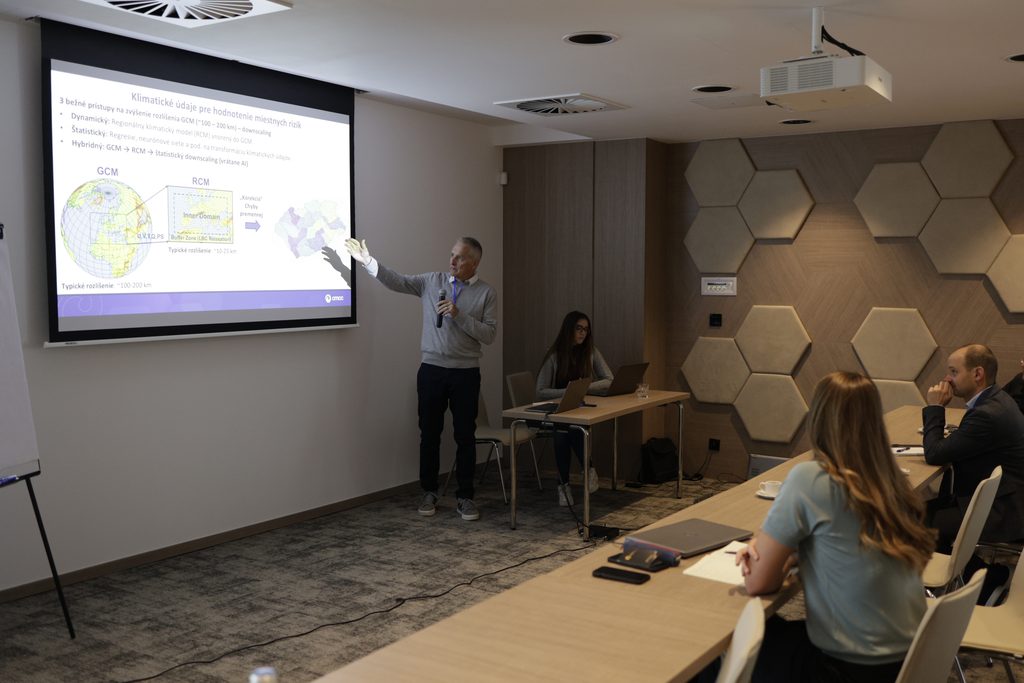
Róbert Blaško, the coordinator of the Nitra living lab, then presented the living lab journey and recapped the most important conclusions from the previous three workshops.
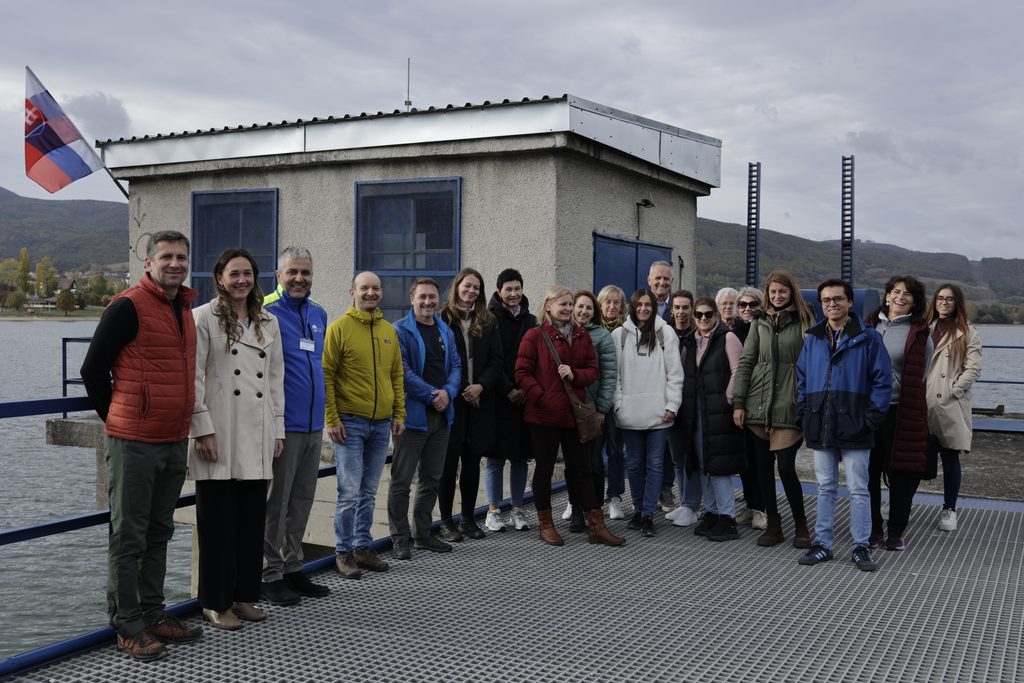
In the afternoon, a field trip took the group into the living lab area. Project´s associated partner, SVP (State Water Management Enterprise), explained how the Nitrianske Rudno – Nováky water-reservoir system, intended for industrial water abstractions, functions. The field trip continued to a former surface mining pit in Lehota pod Vtáčnikom, where the recultivated land offers an opportunity to create a lake as a water-retention adaptation measure. Wetlands, created due to the mining activity, were the last stop.
On the 2nd day, Omar Cenobio-Cruz (University of Uppsala) introduced the hydrological model HYPE and the serious game rules. Stakeholders explored the impacts of water retention measures under two land-use and three climate scenarios. Unlike in the previous serious game, they had an option to choose from 28 different subbasins in which to implement the water-retention measures, either a reservoir or a natural lake, and follow the impacts on the subbasin downstream. The goal was to stay in a “safe zone” defined by environmental flows and flood thresholds. In the second round, all groups worked with the same land-use and climate scenario so that their approaches could be compared.
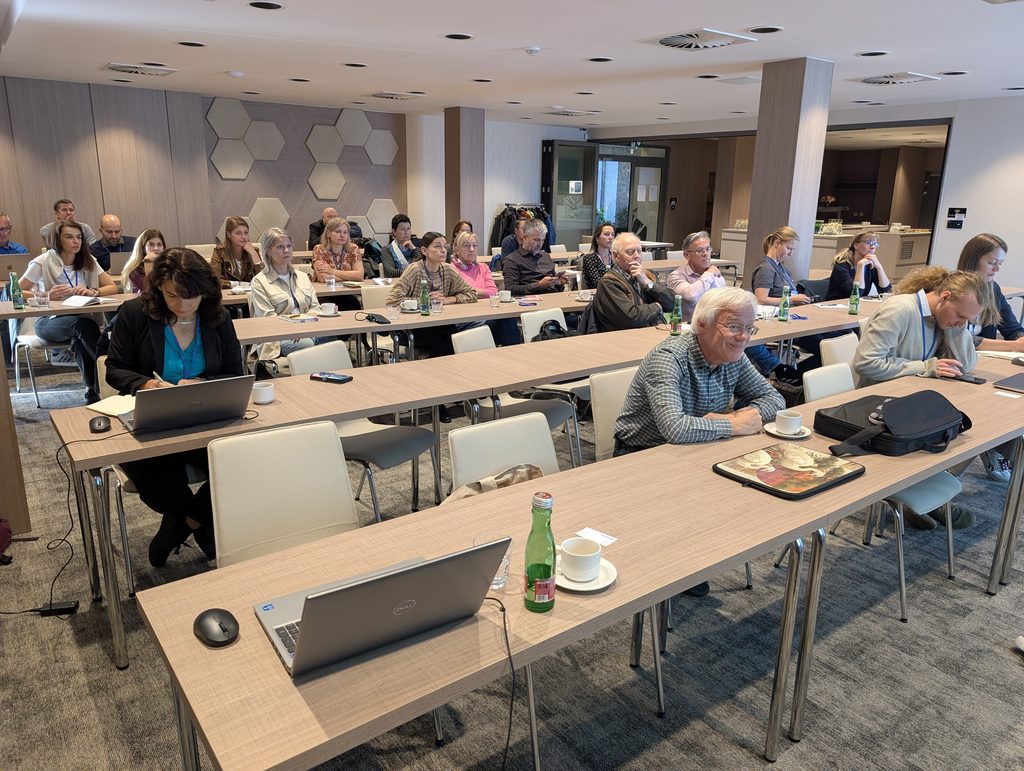
While the stakeholders enjoyed exploring the modelling tool and playing the game, some found it still more theoretical and scientific than actionable. The workshop concluded with an overview of how the Nitra HYPE model is built and how it could be used in future. With further refinement, it could support water-management decisions under uncertain climate futures.