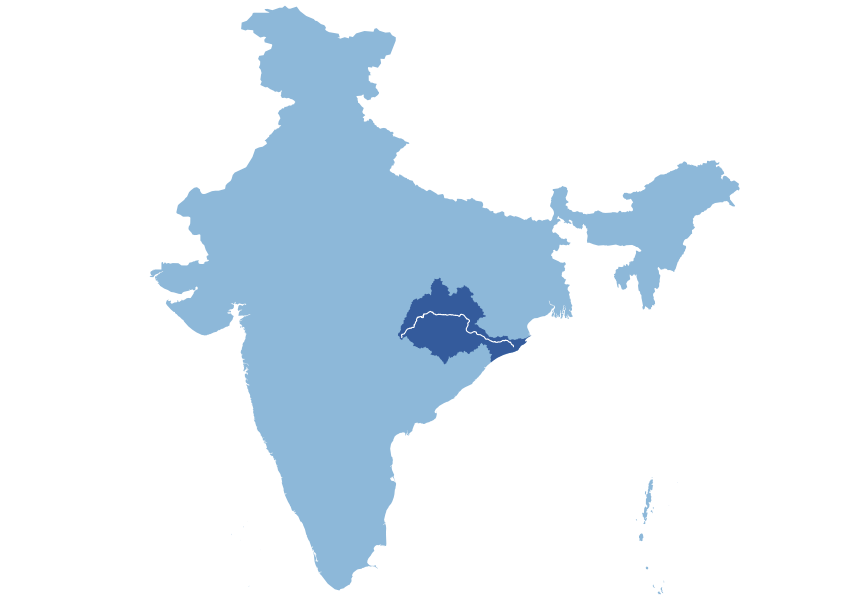
The Mahanadi River is situated in Eastern India and originates in the Eastern Ghats and flows eastward into the Bay of Bengal. The basin’s geography is characterized by mountainous borders in the north, south, and west, surrounding a predominantly flat interior.
The basin primarily experiences a “tropical wet and dry” climate, featuring a distinct monsoon season from June to September. The northernmost regions exhibit a “humid subtropical” climate. Notably, snow is absent across the entire basin, even in the mountainous areas.
Agriculture dominates land use, accounting for 50% of the basin, followed by forested areas (30%) and urban, barren, or water-covered areas (20%). Both commercial and subsistence farming are practiced, with rice cultivation being the primary agricultural activity. Extensive irrigation networks, including canals and reservoirs, support agriculture, with approximately 30% of croplands irrigated. Of this irrigated land, 30% relies on groundwater, while the remaining 70% utilizes surface water. Irrigated lands are concentrated in the eastern parts of the basin (Odisha state), whereas Kharif-style farming is more prevalent in the western half (Chhattisgarh state).
Scroll through the slides to read about the Mahanadi local workshops and serious game.
Workshop 1 – Vulnerability Assessment and Gap Identification
Raipur (India), October 18th, 2023 The first local workshop focused on identifying systemic vulnerabilities and technical gaps within the Mahanadi River Basin. Stakeholders identified critical issues regarding the misperception of water use and availability in the whole basin, the lack of consensus between the two states (Chhattisgarh and Odisha) concerning data sharing, water management, and creation of infrastructures downstream.
On the technical side, stakeholders highlighted the following priorities Modelling: need for extending the WEAP model to the entire basin and integrating it with a groundwater flow model to understand the impacts of intensive or modified groundwater use on the lean season flows, producing economic evaluation of the water management alternatives identified to deal with floods and droughts Monitoring: need for thresholds to the water sue and for a regulating authority formed within the existing departments
Workshop 2 – Scenario Exploration and TAPs Identification
Bhubaneshwar (Odisha) and Raipur (Chhattisgarh), August 14th, 17th, 18th, 2025 The second workshop was delivered through a series of bilateral consultations with 28 total key stakeholders to ensure deep, localized engagement given the complexity of stakeholder relationships on water management between the two Indian states of Chhattisgarh and Odisha. Stakeholders welcomed the integrated basin-scale approach devolved after the first workshop, and emphasized the importance of seasonal groundwater depletion, groundwater–surface water interactions, and the role of canal seepage and irrigation return flows.
Possible TAPs identified: 1. improved groundwater monitoring, and use in irrigation planning. 2. enhanced transparency in reservoir data. 3. improved regulation of industrial water abstractions. Collaboration with groundwater research institutions was identified as a possible pathway to strengthen groundwater-related analysis and management. Download the policy brief on Mahanadi barriers and adaptation policies
Workshop 3: TAPs and scenarios revision
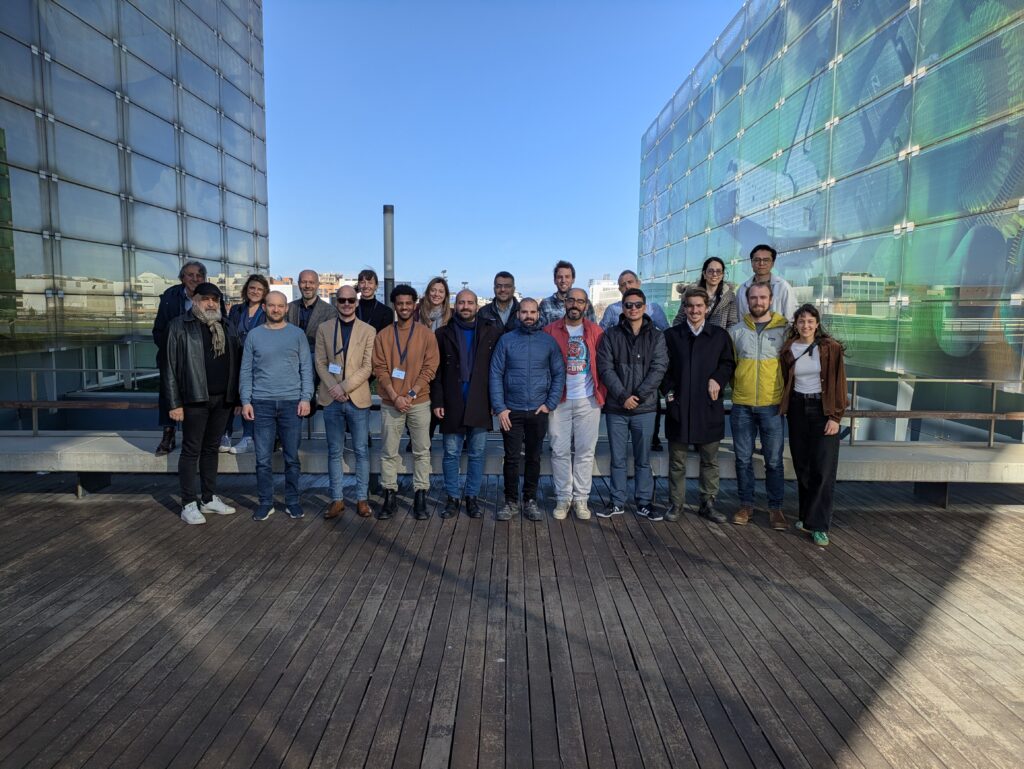
July 21-25th 2026 The third workshop aimed at exploring taps through a serious game including two climate change scenarios (SSP1 and SSP5) and considering 7 global climate models. Through the serious game, stakeholders decided on alternative water allocations towards different sectors (domestic, agriculture, industry, environment) under the two climate change scenarios considered. The workshop highlighted the importance of considering the distinct priorities across the two states in the basin, Chhattisgarh (upstream) and Odisha (downstream), and the key tradeoffs and vulnerabilities.
The fourth and last local workshop is foreseen for Autumn 2026. The goal of the event will be: presenting the detaild results of the modeling suite co-developed within the project; validate the TAPs co-identified with the stakeholders through a serious game; and planning for the co-implementation of the selected TAPs.
Mahanadi Serious game
TRANSCEND serious games are model based, meaning that they rely on quantitative hydrological, climate, and economic models rather than hypothetical narratives. The Mahanadi serious game is currently under development.